
At Pace Los Angeles, the artist's photographs show how many of his strangest ideas came with instructions.
David Lynch once bought a fish in London, took it home, cut it into pieces and photographed the parts as though they belonged to a model aeroplane. He called it Fish Kit and supplied instructions for putting the fish back together. In Mexico, he made a chicken version. The duck was less successful. There were too many small parts for the photograph to record clearly.
It is a useful detail because Lynch is usually discussed in exactly the opposite terms. His name became an adjective for things that resist explanation: dreams, menace, red curtains, strange rooms, unexplained behaviour. Yet his account of the Kits is almost comically practical. The method was simple: take something apart, lay out the components, photograph them and work out how they fit together. When the duck failed, the problem was not conceptual. The picture was blurry.
David Lynch: LA, opening at Pace Los Angeles this month, brings five photographic series made between 1979 and 2008 into the same exhibition for the first time. It is also the first time his work has appeared in Los Angeles since his death last year. Pace says the exhibition will act as a prelude to a broader Lynch retrospective that LACMA is in the early stages of preparing. The Kits sit alongside his photographs of Los Angeles architecture, studies of the nude, Figures and Smoke and the later Couch Series.
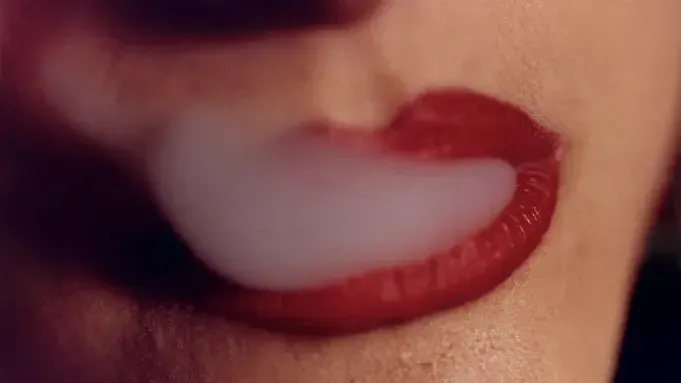
Seen together, they make the word "Lynchian" feel unusually unhelpful. In the Couch Series, reclining figures are layered until their bodies lose their edges. In the nudes, cropping turns anatomy into form. Faces in Figures and Smoke are pushed close to the frame while smoke becomes almost as substantial as the person producing it. These photographs are strange, but their strangeness often comes from a fairly concrete procedure: isolate, repeat, enlarge, remove context, see what remains.
That habit was there well before the photographs. Lynch studied painting at the Pennsylvania Academy of the Fine Arts before moving to Los Angeles in 1972 to attend the American Film Institute, and visual art continued alongside filmmaking throughout his life. Pace's exhibition earns its place because it stops treating that work as an eccentric appendix to the films.
Even Los Angeles looks different through this lens. Lynch began photographing its architecture in 1979, concentrating on industrial edges and overlooked buildings rather than producing another mythology of Hollywood. The photographs have atmosphere, certainly, but they also have the quality of someone examining evidence: façade, opening, surface, shadow. A city can be subjected to the same treatment as a body or a fish. Remove enough context and something familiar becomes difficult to identify.
Perhaps that is a better way of looking at Lynch now. The mystery was real, but so was the appetite for understanding how things were constructed. His work repeatedly moves between those two impulses: dismantling something with great care and discovering that putting all the pieces in front of us does not necessarily make it easier to understand. Sometimes it makes it stranger.
David Lynch: LA
Pace Los Angeles, 1201 South La Brea Avenue
Opening 18 September; on view through 24 October 2026.