
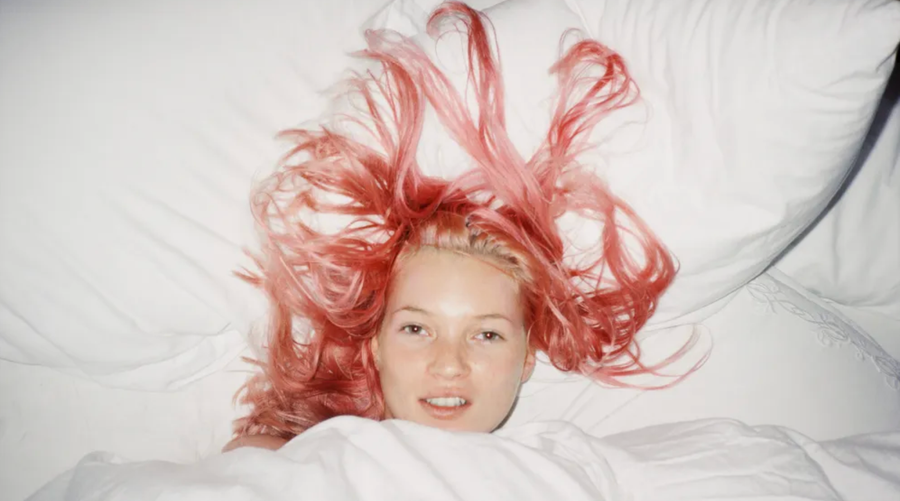
As Tate Britain prepares to revisit the decade when fashion, art, photography and nightlife occupied the same rooms, the clothes are the easy part to copy.
Juergen Teller photographed Kate Moss in 1998 with pink hair, little apparent production and none of the polish that would later become standard around a model of her stature. David Sims was making fashion pictures that could look almost hostile to fashion. Alexander McQueen turned runway shows into events people still describe from memory. Hussein Chalayan buried clothes in a garden. Edward Enninful had become fashion director of i-D at 18.
These names now arrive with the weight of institutions behind them. This October, Tate Britain brings many of them together in The 90s: Art and Fashion, spanning McQueen, Vivienne Westwood, Chalayan, Teller, Corinne Day, Sims, Tracey Emin, Chris Ofili, Sarah Lucas and others. Enninful has edited the accompanying book. The exhibition runs from 8 October 2026 to 14 February 2027.
The museum setting introduces a remove that did not exist at the time. Much of what made the period compelling came from the proximity of its disciplines.
Fashion editors knew artists. Photographers moved between magazines, record sleeves and portraiture. Designers, musicians and artists appeared in the same clubs and on the same pages. A small magazine could give someone space before anyone had decided whether they mattered.
London helped because it was porous. Central Saint Martins fed into clubs, studios and magazines. i-D and The Face could give whole pages to people who were still becoming themselves. Cheaper rents allowed young artists and designers to remain in the city while making work whose commercial value had yet to be established. Professional and social life overlapped.
The results were sometimes messy, badly lit and underfunded. They also produced a visual language that fashion continues to mine three decades later.
Flash photography, skinny tailoring, awkward casting and an aversion to obvious glamour keep returning. So do the designers, photographers and muses of the period. What once looked abrasive has been absorbed so thoroughly that much of it now looks almost classic.
Something harder to reproduce sits underneath the styling.
The 1990s creative scene developed before every interesting person, room and outfit arrived with its own distribution system. A club night could remain local. A student collection might be seen by a few hundred people before its photographs travelled further. Magazines acted as gatekeepers, occasionally brilliant and occasionally wrong, but they made choices. Subcultures had time to develop their own codes before those codes were photographed, named and sold back to everybody else.
Today the distance between discovery and exposure can be measured in hours.
There are obvious advantages. A designer no longer needs to live within a few postcodes of the right editor to be seen. Photographers can publish without waiting for a commission. Scenes form between cities rather than only inside them.
But culture now reaches the audience while it is still being made. Reaction is immediate. Recognisable signals travel furthest. An aesthetic can acquire a name before anyone has had much time to live inside it.
Tate Britain will inevitably give the decade a cleaner boundary than it had while happening. Museums do that. McQueen becomes fashion history; Emin becomes art history; Teller becomes photography history. At the time, those categories were of much less use.
Harder to recover is the proximity: talented people from different disciplines, inexpensive space in which to gather, small publications willing to take risks before anyone had decided who mattered. Thirty years later, those conditions are considerably rarer than the clothes.
The 90s: Art and Fashion, Tate Britain, London, 8 October 2026–14 February 2027.