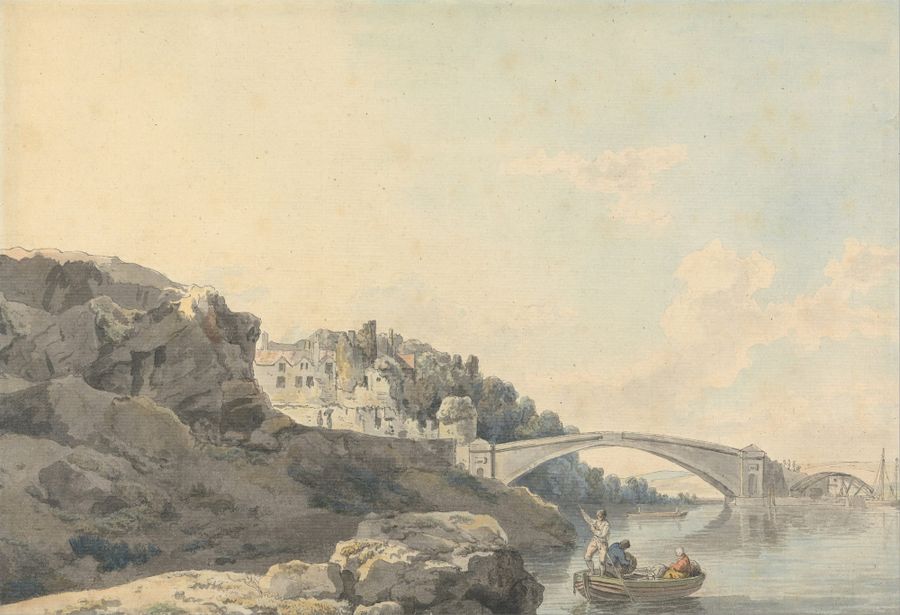
Lismore is a small town on the River Blackwater in County Waterford, in the south of Ireland. Its railway station is built of Derbyshire grit stone shipped from Chatsworth. The seventh Duke of Devonshire paid for it, and for most of the line to Fermoy, after the Great Southern and Western Railway declined to extend its track to his Irish house, Lismore Castle. People called it the Duke's Line. He made the first journey on it privately on 26 July 1872, two months before it opened to the public. The line closed in 1967. The castle is still the Devonshires' Irish house and stays closed to visitors, but its gardens open daily from mid-March to late October: seven acres inside the walls, with sculpture by Antony Gormley among the camellias. In 2026 a ticket cost €11 and included the gallery.
Further down the Blackwater, the valley has new owners, and they don't come by train. In 2024 James Dyson paid €29.25 million for Ballynatray, near Youghal. The planning appeals board later allowed him a helicopter landing area, limited to fifty flights a year. In August Mark Zuckerberg and Priscilla Chan bought Strancally Castle, a short way upriver. Early estimates put the price at €20 million to €30 million. The Property Price Register later recorded €51,171,155. In Knockanore, the village beside it, people said they were used to helicopters.
Neither house is open to the public, though Ballynatray opened its doors this year for the Blackwater Valley Opera Festival. Its first recital, in May, was given by the mezzo-soprano Tara Erraught. Tickets cost €60 to €100 and sold out. The festival runs for a week from late May, and this year's tickets went on sale in January, which is when to watch for next year's programme. The other way to see the house is from the river. In summer Tony Gallagher takes his boat, the Maeve Óg, from Youghal up the Blackwater past Ballynatray and the ruins of Molana Abbey. The trip takes ninety minutes, costs €20 for adults and is booked by ringing him.
At the other end of the county, Waterford Airport is lengthening its runway from 1,433 metres to 2,287. It has had no scheduled flights since 2016, and for most of the decade the government would not pay for the work. The money now comes from Kelcy Warren, chairman of the Texan pipeline company Energy Transfer, who owns Castletown Cox, a Palladian house in Kilkenny forty minutes from the airport. He is putting in about €30 million. In return the county council sold the airport's 207 acres, valued at €2.3 million, for €50,000 to Waterford Airport Ltd, the new company that runs it under his control, and the council's chief executive signed an agreement to keep his name private. It stayed private until January. The Duke paid for a railway to reach his castle. A century and a half later, the way into the valley is again being paid for privately. One Knockanore resident told the Irish Times her theory: Warren had extended the runway so his own jet could land, and that may have helped persuade Zuckerberg, since Strancally is a short helicopter hop away.
The best guide to what comes next is in Abbeyleix, a small town in the midlands. In 2021 John Collison, the Irish co-founder of Stripe, paid about €20 million for Abbey Leix, the estate beside it. He then bought back Millbrook House, a derelict mansion that had once belonged to the estate, from the county council for €400,000, and set out to spend €6 million turning it into a restaurant and guesthouse with the chef Cúán Greene. Not everyone was grateful. One objector told the planners that the town already had fourteen empty commercial units. The chairman of the local Tidy Towns committee called Collison's arrival great for the town.
So far the Blackwater has gone the other way. Ballynatray used to take paying guests. Dyson's planning files describe it as a single residence. His local gestures have been modest and specific: money for an AstroTurf pitch, according to a neighbour, permission for the air ambulance to land, and the opera recitals. Strancally was a private house under its last owners and remains one. Two properties near Lismore went on the market this year. Fortwilliam, nearly four hundred acres above the river, was offered whole for €12 million. Richmond House in Cappoquin, run for years as a guesthouse and restaurant, is listed at €1.75 million, and its brochure says West Waterford has become increasingly fashionable. Whoever buys them will show whether the valley's next owners keep their doors open or close them.
Agents describe the attraction in practical terms: a stable legal system, access to Europe and privacy. One in west Cork says buyers have stopped letting her apologise for the rain. Zuckerberg had looked at Ireland before Strancally. John Malone has said Zuckerberg once offered to buy Castlemartin, Malone's estate in Kildare. Three very rich men now own property within reach of a jet runway that one of them paid for. Nobody has announced a fourth.
The airport's own future is less certain. The first scheduled flights are due in summer 2027, once the Irish Aviation Authority has recertified it. Until then, the nearest scheduled flights leave from Cork and Dublin. Ryanair has said it would probably fly to London two or three times a week, as long as it is free. Aviation analysts at CAPA say Waterford has a fight on its hands to make the €30 million pay. If the eight hangars in its planning application fill with private aircraft, the airport's most regular users may be people who never buy a ticket. Its future also rests largely on one investor. Big estates change hands too. Humewood in Wicklow sold for €25 million in 2006 and later went to Malone for about €7.2 million. The Alen-Buckleys kept Strancally for twenty-five years. The Duke's line lasted ninety-five.